Every hour your business is closed, you're losing revenue.
Commercial-grade water, fire, mold, and storm restoration with dedicated project management, Xactimate documentation, and insurance adjuster coordination.
Dedicated PM
Project management
24/7 Emergency
Response
Xactimate Commercial
Documentation
BOP + CGL + Property
Coverage
BI claim support
Business Int.
ADA + Code
Compliance
Commercial property damage is fundamentally different from residential damage — not in the technical restoration process, but in the business consequences. A flooded retail space, a fire-damaged office building, or a mold contamination in a medical facility carries revenue loss, tenant displacement, and liability implications that residential events do not. Every day of closure costs real money. Speed, coordination, and documentation quality directly affect your business outcome.
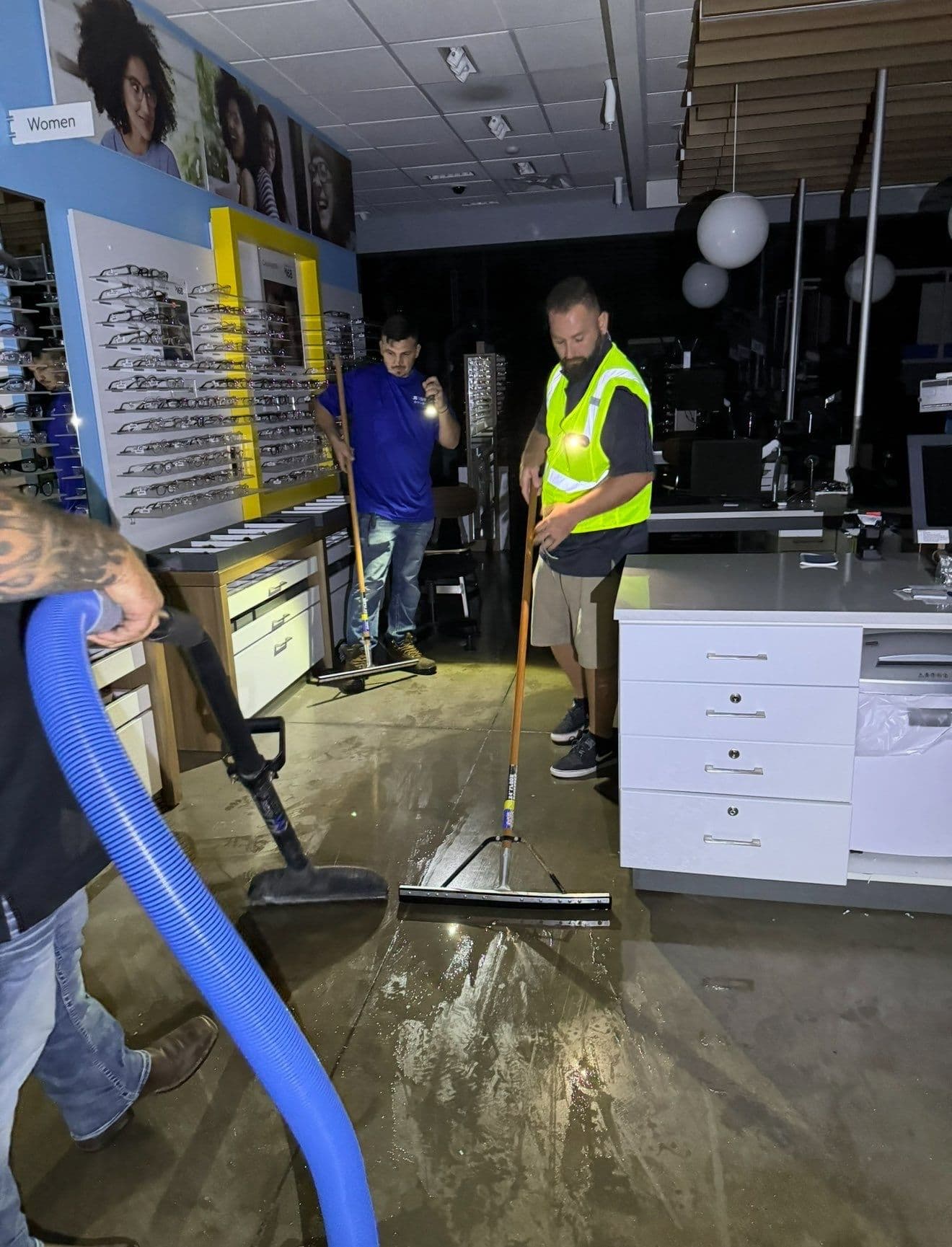
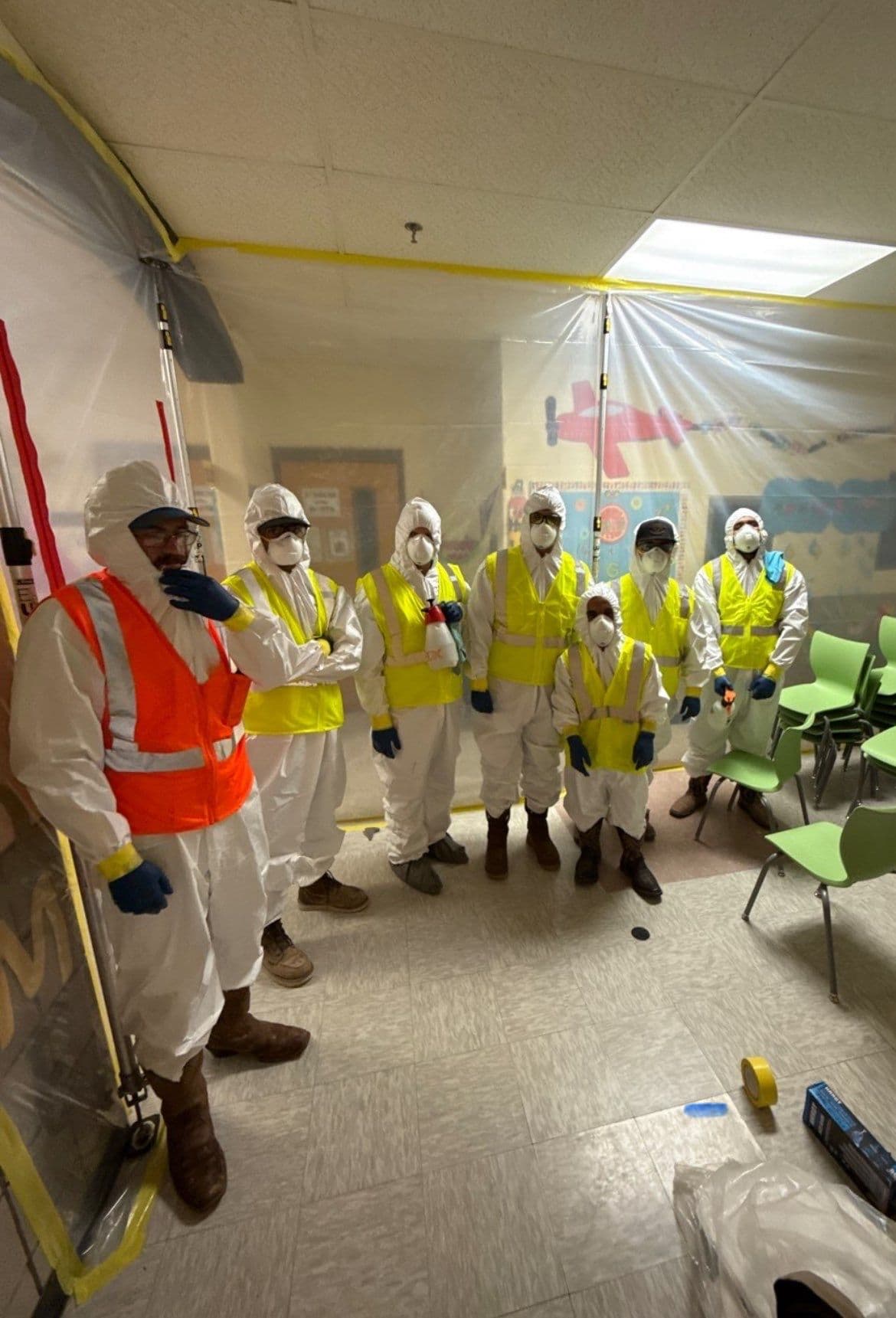
First Response Restoration provides commercial restoration services across all damage types — water damage, fire and smoke, mold remediation, storm damage, and biohazard. Our commercial projects are assigned a dedicated project manager who coordinates all trades, communicates directly with your property manager, insurance adjuster, and tenants, and maintains a documented schedule from day one.
We have experience with office buildings, retail centers, restaurants, medical and dental facilities, apartment complexes, industrial properties, and mixed-use developments across Houston and 10+ states. Our commercial documentation follows Xactimate commercial protocols and meets the requirements of commercial property insurance policies, which differ significantly from residential policies.
Commercial property damage: the hidden costs
The direct cost of property restoration is often smaller than the indirect costs: business interruption (BI) losses, tenant lease obligations, regulatory compliance requirements, and reputational damage from extended closure. Commercial insurance policies typically cover both direct property damage and business interruption losses — but BI claims require specific documentation that most contractors are not equipped to provide. Our commercial team documents both the physical damage and the business impact from day one.
Large-loss commercial restoration: scale and complexity
Commercial restoration differs from residential in scale, regulatory requirements, and systems complexity. Commercial buildings contain HVAC systems serving thousands of square feet — a single water or fire event can contaminate the entire air handling system. Electrical systems are higher voltage with greater fire risk during restoration. ADA compliance requirements affect all rebuild work. Industrial hygienist involvement is typically required for large-loss commercial claims.
Commercial properties we restore
Real jobs. Real results.
Our commercial property restoration process — step by step
Emergency response & business triage
We assess what can be done to keep any part of the business operational during restoration. Partial occupancy, temporary facilities, and phased restoration are planned immediately.
Dedicated project manager assignment
A single project manager is assigned as the point of contact for the property owner, property manager, tenants, and insurance adjuster. Daily written updates are provided.
Full commercial scope documentation
Complete Xactimate commercial estimate covering all damage types, all systems (HVAC, electrical, plumbing), all structural assemblies, and business interruption documentation.
Phased restoration planning
A restoration schedule is developed that minimizes business interruption — prioritizing the most revenue-critical spaces and systems for earliest completion.
Commercial mitigation work
All applicable mitigation services — water extraction and drying, fire and smoke cleaning, mold remediation, or storm damage stabilization — performed to commercial-scale standards.
Commercial rebuild & systems
Structural restoration, commercial finish work, HVAC restoration, electrical, plumbing, and code-compliant finishes completed by licensed commercial subcontractors.
Certificate of occupancy & insurance closeout
All permits closed, certificate of occupancy obtained, final insurance documentation submitted, and BI claim period formally ended with regulatory clearances.
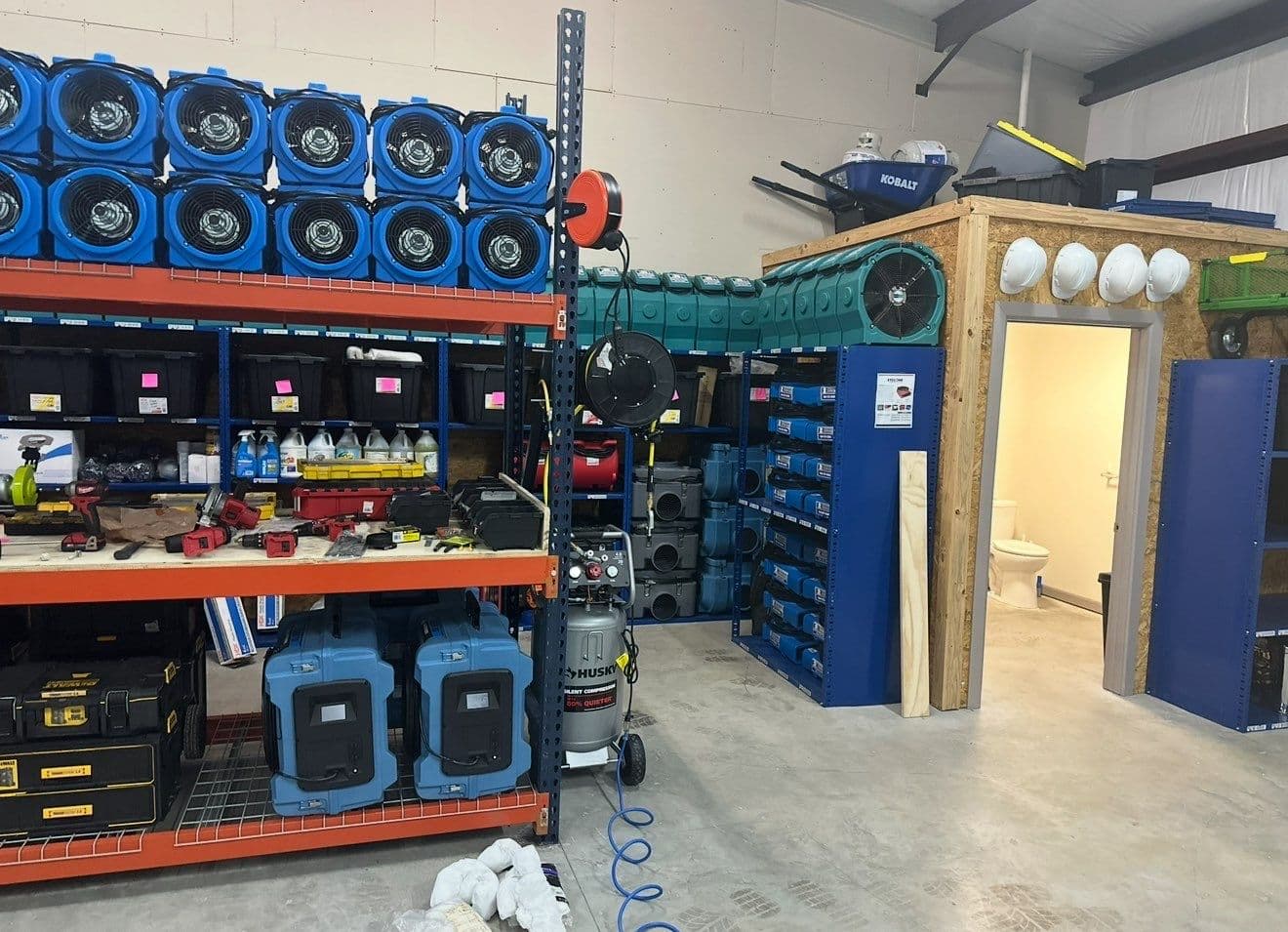
Equipment we use — and why it matters
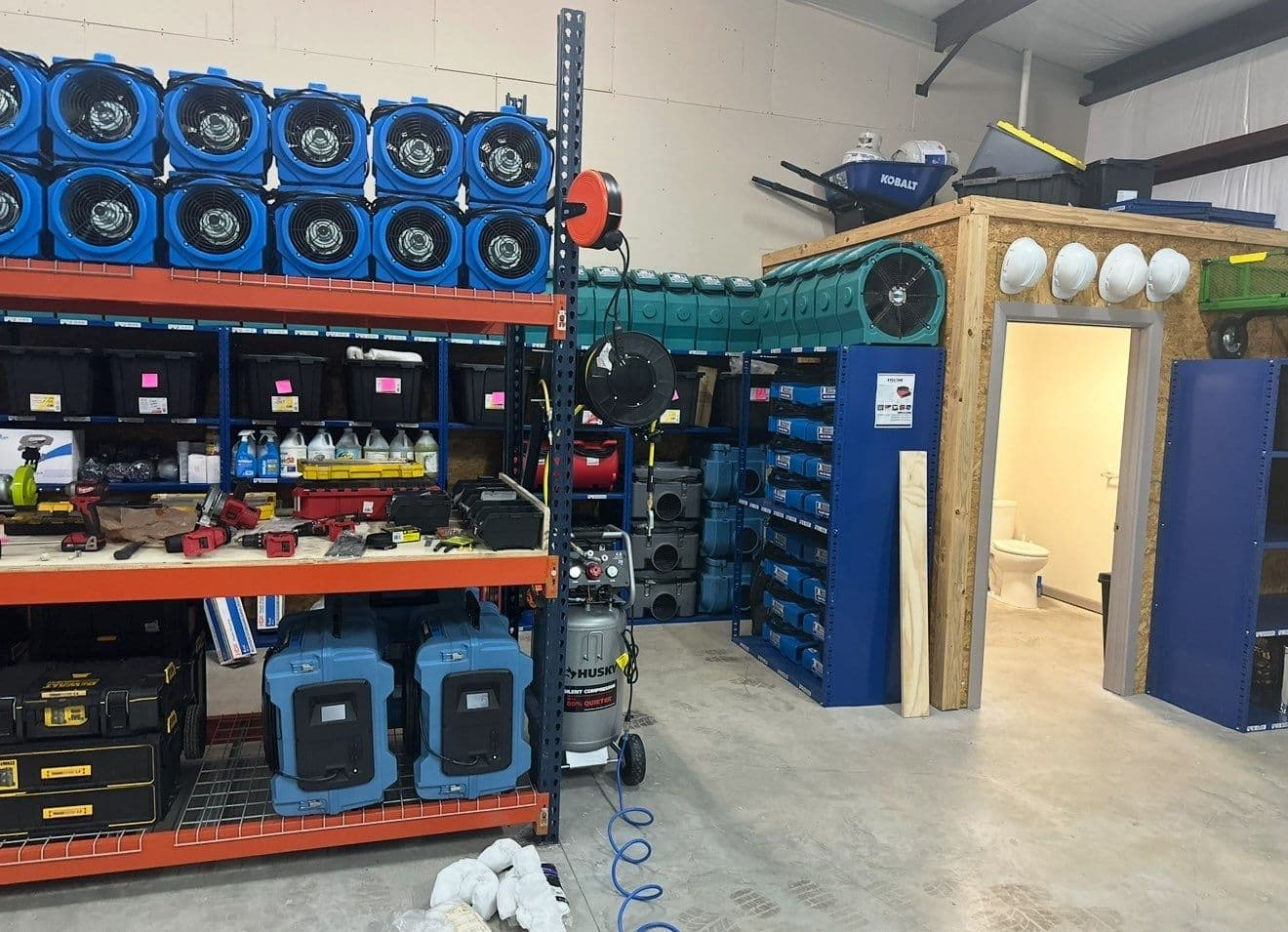
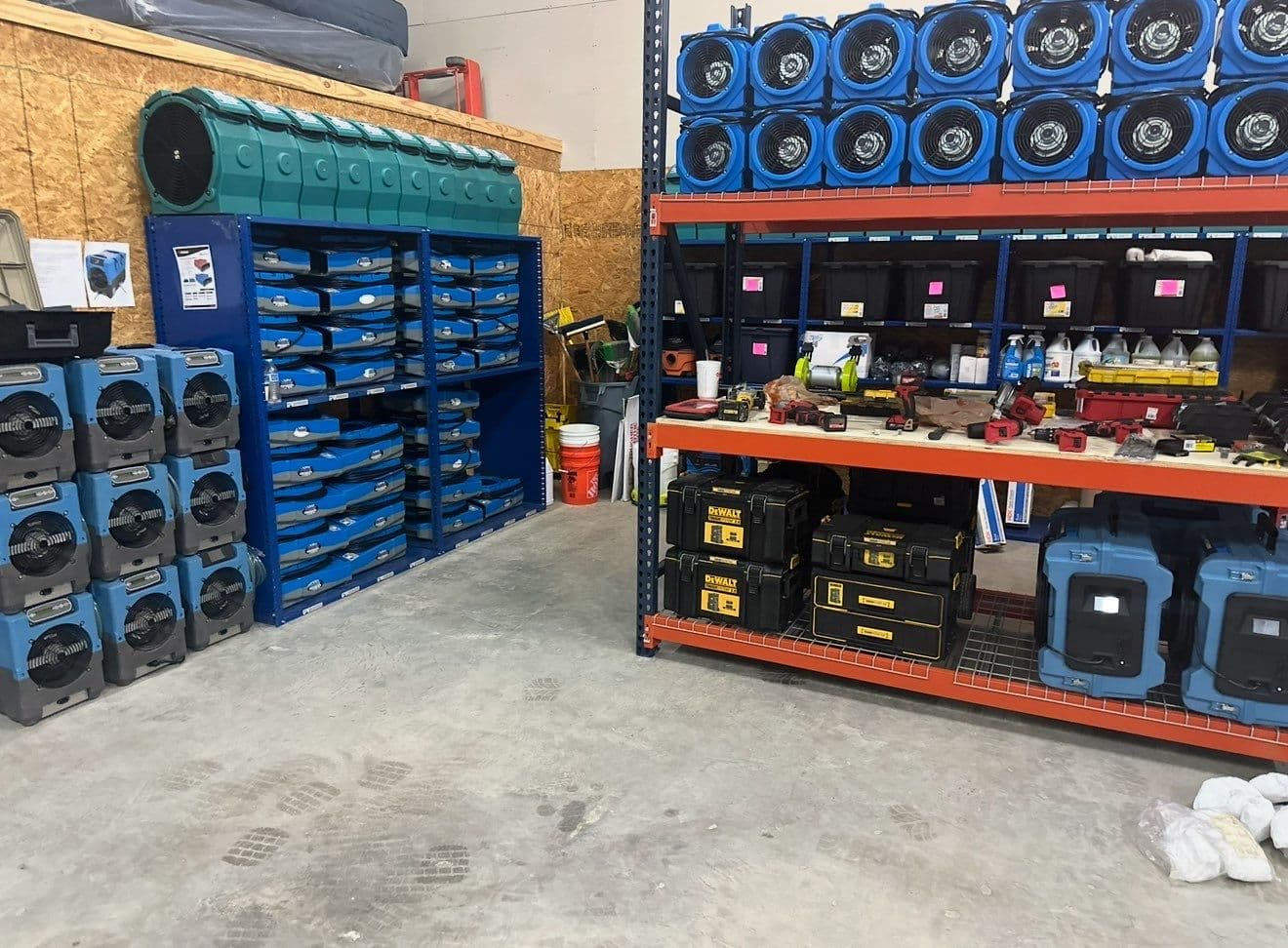
Professional restoration requires professional equipment. Here's exactly what we bring to your property and why each piece is critical.
Large-Loss Extraction Fleet
High-volume commercial water removal
Commercial water events require significantly more extraction capacity than residential. Our fleet includes multiple truck-mounted extractors and industrial submersible pumps for rapid large-scale removal.
Commercial LGR & Desiccant Dehumidifier Banks
Large-area structural drying
Commercial drying requires industrial-scale dehumidification — multiple units networked to cover large floor plates, warehouse spaces, or multi-floor water events.
Drying Documentation System
Insurance and business interruption documentation
Commercial property claims require more detailed documentation than residential. Our system generates daily moisture logs, equipment deployment records, and drying progress reports for commercial property adjusters.
Commercial Air Movers (High CFM)
Rapid evaporative drying
Commercial-grade centrifugal air movers move higher CFM than residential units — critical for drying large commercial floor plates, open retail spaces, and warehouse environments efficiently.
HEPA Industrial Air Scrubbers
Air quality during restoration
Commercial occupants — customers, employees, tenants — may still be using unaffected portions of a building during restoration. Industrial air scrubbers maintain acceptable air quality throughout.
Xactimate Commercial Estimating Software
Scope and insurance documentation
Commercial claims require commercial Xactimate scope — different line items, material costs, and labor rates than residential. Our estimators are Xactimate certified for commercial scope production.
Commercial restoration costs — what to expect
Commercial restoration costs vary enormously by property type, damage extent, and business interruption impact. Commercial property insurance (CPP/BOP) covers the structural damage; business interruption insurance covers lost income during restoration.
Small retail or office — single-floor water or fire event
Covered by commercial property policy. Document BI losses from day one for income claim.
Mid-size commercial — multi-floor or significant structural damage
Phased restoration to minimize BI losses. Project manager assigned for adjuster coordination.
Large-loss commercial — hotel, hospital wing, industrial facility
Large-loss protocols. Multiple crews, multiple trade coordination, dedicated project management.
CAT commercial — storm event affecting multiple properties
Nationwide deployment. CAT team dispatch. Emergency priority response for critical infrastructure.
Business interruption (BI) documentation is often more valuable than the structural claim for commercial clients. From day one, we document the restoration timeline, scope, and business impact in a format your BI adjuster can work from directly.
Commercial insurance claims: property damage and business interruption
Commercial property insurance claims involve multiple coverage lines: property damage (building and contents), business interruption (BI) or business income, extra expense coverage, and potentially commercial general liability (CGL) if third-party claims arise. Our commercial documentation team is experienced with all commercial coverage types and provides the Xactimate commercial estimates, daily project logs, and BI documentation your adjuster requires.
Commercial restoration across the Houston metro and Gulf Coast
Houston's commercial property market includes significant exposure to flooding from the city's bayou system, hurricane wind and storm surge on Gulf-facing properties, and the water damage risks common in older commercial construction (single-ply roofing, legacy HVAC systems, and building envelopes from the 1970s and 1980s). We have completed commercial restoration projects in the Energy Corridor, Galleria, Medical Center, Downtown, and suburban markets throughout Harris, Fort Bend, and Montgomery counties. Our multi-state capabilities mean we can respond to commercial clients with multiple locations across the Southeast.
Frequently asked questions
How do you minimize business interruption during restoration?
We begin with a business triage — identifying which spaces and systems are most critical to operations and prioritizing those for earliest restoration. Where possible, we phase work to allow partial occupancy throughout the restoration period. We work extended hours, including nights and weekends, to accelerate timelines when business interruption costs justify the premium. All scheduling decisions are made in consultation with the property owner and their BI coverage limits.
Do you handle commercial mold in medical facilities?
Yes. Medical and dental facilities have specific requirements including HIPAA considerations for patient records and information, infection control protocols that complement our remediation procedures, and regulatory requirements from The Joint Commission and state health agencies. We have experience with clinical environment mold remediation and work with the facility's infection control officer to ensure our protocols meet their requirements.
What is Business Interruption insurance and how does it work with restoration?
Business Interruption (BI) insurance covers the income a business loses during the period required to restore a property after a covered loss. The BI period runs from the date of loss until the property is restored to the condition it was in before the loss. Accelerating the restoration timeline directly reduces the BI claim — which is why investing in full-scale commercial restoration resources (not the minimum viable approach) often costs less in total when BI losses are accounted for.
Can you restore an apartment complex while tenants are still in place?
In many cases, yes. We develop detailed tenant communication plans, work schedules that minimize disruption to occupied units, and phased restoration sequences that allow habitability in unaffected areas throughout the project. For severely damaged buildings requiring full evacuation, we coordinate with the property manager on tenant relocation documentation for ALE claims and maintain consistent communication with all displaced tenants.
Need help now? We respond in 60 minutes.
24/7 emergency response — IICRC certified — insurance handled.